



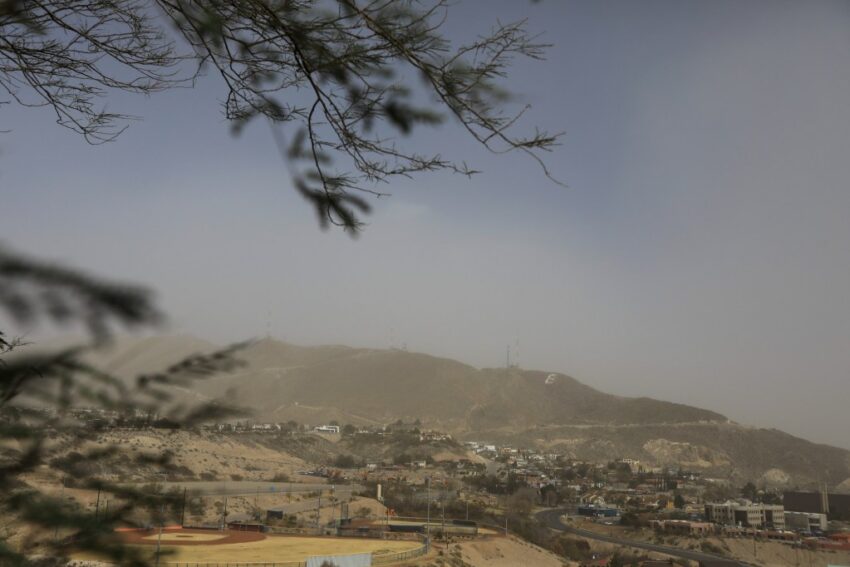

Sitting on his couch in Horizon City, Frank Mendez felt his back ache as he watched the Super Bowl with his family last year. He figured the soreness came from the long drive he just made from San Antonio. The confetti fell at the end of a lopsided game and Mendez went to bed thinking a good night of sleep would ease the pain.
But the pain worsened with each passing day. He felt like someone was stabbing him on the lower right side of his back.
By the fourth day, he checked into an emergency room in Horizon City. An X-ray showed nodules in his right lung and a doctor diagnosed him with walking pneumonia, a mild lung infection. After a steroid shot, Mendez went home with antibiotics to treat the infection and lidocaine patches to relieve his back muscle.
Less than a week later he was back in the ER, at University Medical Center of El Paso this time. The pain had become so unbearable he could barely sleep and when he did, he slept sitting up. A CT scan revealed a 3-cm lesion in his lung and bloodwork confirmed the source: coccidioidomycosis, a respiratory fungal infection also known as Valley fever. The fungus spores that cause coccidioidomycosis live in sandy soil where human activities and wind kick them up in the air.
“My biggest question was, ‘Where did I get it?’ Which kind of freaked me out,” Mendez said.
A year later, the 50-year-old El Paso Fire Department worker is still taking anti-fungal medication to shrink the lesion.
Environmental scientists warn that as drought continues to intensify across Texas and the Southwest, the region could experience dustier conditions. In places like El Paso that experience seasonally strong winds, blowing dust can increase respiratory health risks.
The most common lung diseases in El Paso include asthma and chronic obstructive pulmonary disease, or COPD. Meanwhile, rising temperatures from human-caused climate change means El Paso’s growing season has gotten longer, prolonging the period when flowering plants release allergens.
“El Paso is a difficult place to be for people with chronic lung illness,” said pulmonologist Dr. Kevin Rowley. “Not least of all the wind and dust, which is not uncommon here, but I’ve had patients who could never really get their breathing well-controlled and well-treated and would give up and move somewhere else to get better.”
“There is a belief that living in a desert is good for some lung diseases,” he said. “But in my experience, El Paso seems to bely that belief.”
Dust events can reveal undiagnosed lung problems
A University of California, Merced study looking at dust events recorded from 2010 through 2014 in El Paso found the number of hospitalizations in El Paso are five times higher after a dust event than before it.
Rowley said the duration someone is exposed to dust or particulate pollution matters.
While a brief period of exposure probably doesn’t have a significant association with chronic lung problems, it can unmask previously undiagnosed lung problems or exacerbate current ones. Asthma is more frequently diagnosed in adolescence, but it can also develop over time and not get diagnosed in people until their later adult years, Rowley said.
“It’s not uncommon for someone to come in, never had lung problems before, but then they get caught in a dusty day and their breathing goes out on them,” he said.

More than 16,000 children and 54,000 adults in El Paso have asthma, according to the American Lung Association. More than 31,000 people in El Paso have COPD caused by long-term exposure to lung irritants, such as smoke and air pollution.
Corina Burciaga raises her two children, 12-year-old Andres and 7-year-old Caroline, in Sunland Park, New Mexico, just outside El Paso. Both of her children suffered asthma attacks through an abnormally high number of dust storms last year – the most storms since the 1930s Dust Bowl.

Andres and Caroline use a daily inhaler and have albuterol as an emergency inhaler for bouts of wheezing or shortness of breath. Their asthma flared up on the days when powerful gusts of wind and sand ripped through the region. Burciaga remembered the calls she received from her children’s schools informing her their albuterol wasn’t helping and they couldn’t control their coughing.
Her children had to take a course of steroids and miss school for a couple days until they got their asthma under control, she said. This spring has been quieter so far, but Burciaga said she began bracing herself after Caroline complained of throat irritation during a dust event in February.
“My husband and I have thought about moving to Ruidoso to help them because it’s getting worse,” she said. “We’ve never seen it get this bad for them.”
People with underlying health conditions or weaker immune systems, such as children and elderly people, are at higher risk for illness and infection from dust exposure, said Dr. James Tarbox, chief of allergy and immunology for Texas Tech Physicians.
They have the possibility of contracting pneumonia, and in rare cases, need treatment in the intensive care unit for haboob lung syndrome, a severe and acute respiratory illness caused by inhaling high concentrations of dust, Tarbox said. For those with cardiovascular disease, there is a higher rate of heart attack, stroke and heart failure.
What’s in the dust itself can also irritate the lungs, from heavy metals to the Valley fever-causing fungus that thrives in low rainfall and high temperatures.
Valley fever surveillance remains lacking in Texas
Valley fever is endemic to a region stretching from California through West Texas. Despite its presence in Texas, the state health department does not require medical care providers to report coccidioidomycosis cases. El Paso County is the only county in Texas that reports cases.
Most people who catch Valley fever experience no symptoms or mild symptoms that resolve on their own. But lack of awareness can lead to severe cases that go untreated for too long and turn into serious, chronic complications.
In 2025, researchers led by epidemiologist Dr. Narges Khanjani at Texas Tech Health El Paso published a paper in the Southwest Journal of Medicine calling for Texas to make Valley fever a notifiable condition – an illness of significance to public health.
Models demonstrate that climate change will likely expand Valley fever’s footprint in Texas, according to the paper. The disease may already be affecting Texans at higher rates than what’s known because of misdiagnosis and the lack of mandatory reporting. The paper also noted coccidioidomycosis-related hospital visits were most common among Hispanic people.
The authors argue physicians working in the endemic region should become familiar and stay up to date with coccidioidomycosis, including its confusing symptoms that mimic pneumonia and other respiratory illnesses..
“Yet there is a clear gap in medical education and public health education that leads to potential harmful effects,” the paper reads.
Khanjani and other researchers have an upcoming paper that suggests a relationship between dusty days and Valley fever incidences in El Paso, based on reported cases and meteorological data between 2013 and 2022.
Mendez, the Horizon City resident diagnosed with Valley fever, said his lung lesion has shrunk a centimeter since his CT scan last year at UMC. His doctor upped his dosage of antifungal medication and Mendez is hopeful the lesion will eventually disappear.
“Those dust storms were not helpful at all for my breathing,” Mendez said of last spring. “I didn’t have a mask with me a couple days and it would hurt my lungs.”
Burciaga said she tries to keep her kids at home during dust events if they’re not at school. They wear masks if they go out those days and have open appointments with their pulmonologist in case they need to show up to the clinic without a scheduled time slot.
“As soon as it starts, it’s depressing,” Burciaga said of the wind and dust. “I already know my kids are going to get sick. I know I’m going to have endless appointments, I know they’re getting back on steroids, going to miss school, going to get calls from school. It’s pretty sad as a mom.”
How to protect your lungs in a dust storm
Guidance from Dr. Kevin Rowley, pulmonology, and Dr. James Tarbox, allergy and immunology
- Stay indoors when possible.
- If going outside, wear a mask such as a N95 or something similar that seals around the nose and mouth. A surgical mask is not effective.
- Check the air quality index in the days after a dust event and continue wearing a mask outside on days with poor air quality.
- Minimize dust and pollen inside the home by making sure windows and doors are properly sealed, changing air filters monthly during the windy season and vacuuming at least once a week.
- Change the air filter in your vehicle on a routine basis and keep windows closed.
- Consider taking a shower, using a saline nasal rinse and washing your clothes after you arrive home.
The post Valley fever to asthma attacks: How windy weather, blowing dust wreak havoc on lungs appeared first on El Paso Matters.
Read: Read More