



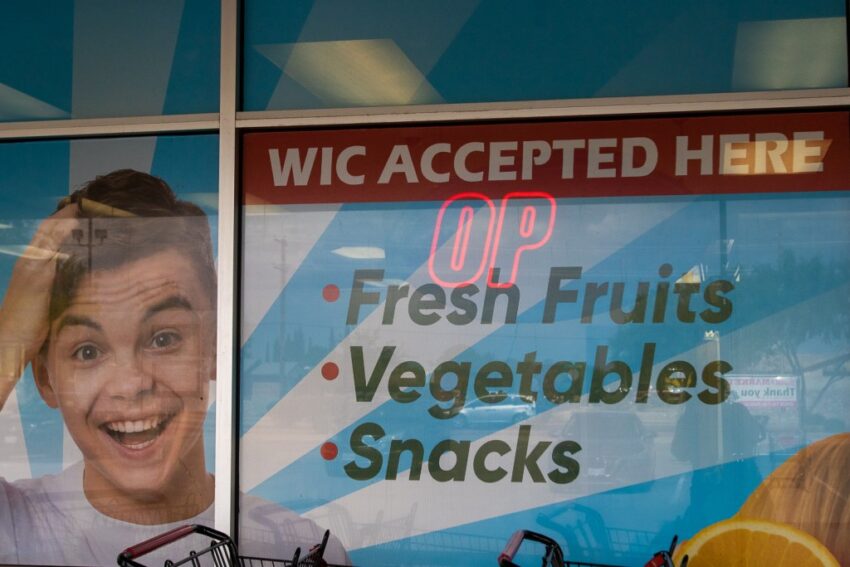

El Paso resident Brianna McBride said she has to forgo food benefits for her and her 2-year-old daughter this month after postponing a mandatory check-in for the Women, Infants and Children program. Her rescheduled appointment isn’t until August.
But new changes in the WIC program could make it easier for McBride and other women to keep their monthly food supplements.
El Paso mothers and pregnant people enrolled in WIC will soon be able to complete their quarterly check-ins remotely instead of in person to receive their benefits. Texas also rolled out new EBT cards this month linked to the myWIC app, where clients can track purchases and appointments online.
WIC is a supplemental program to help children younger than under 5 and low-income mothers and expecting mothers meet their nutritional needs. Children younger than 5 make up more than half of all WIC participants, according to recent data from the Texas Health and Human Services Commission.
McBride, a single mother who has received WIC benefits for two years, said it was challenging to make the appointments because of her job in the service industry. Wait times at the WIC center in Socorro could last up to one-and-a-half hours, she said.
McBride takes nursing classes at El Paso Community College in addition to working full time. As a restaurant server, she receives her work schedule with short notice and it can conflict with her WIC appointments.
“I think the benefits are diminished when people have to go in person and waste time,” McBride said. “Gas is $4 a gallon. You subtract that from the benefits you get. If you’re trying to assist someone, you shouldn’t cost them money.”
“I can only imagine if I didn’t have a car how much harder it would be,” McBride added.

Previously, WIC participants had to attend an in-person appointment after completing a nutrition education class every three months. While classes can be taken online, people who missed their quarterly check-ins or rescheduled their appointments to a future date could experience gaps in their benefits.
The local WIC agency serves up to 26,000 people in any given year, said Adriana Archer, WIC program director for the city of El Paso. The program is still in the process of shifting to phone appointments, so not every participant will receive a phone call this month, Archer said.
How does the WIC program work?
Unlike the Supplement Nutrition Assistance Program, where participants receive a monthly cash amount for groceries, WIC participants have a list of items they can purchase including whole grains, eggs and infant formula. They also receive a set cash amount for fruits and vegetables.
READ MORE: SNAP enrollment declines in El Paso after Trump policy changes
Nutrition during pregnancy and postpartum for women, as well as the first years of a child’s life, are critical for the child’s development, Archer said. These food packages are designed to provide nutrients at high risk for deficiency in low-income families, such as calcium, folic acid, protein and iron, she said.
“Honestly, just the peanut butter alone that you get through WIC is such a good resource, when you’re trying to get protein when you’re breastfeeding,” McBride said. “Because WIC requires you to get those specific things, you eat things you normally don’t eat. I didn’t normally eat whole grain bread, I got white bread. But since I got it through WIC, we now prefer whole wheat.”
The income threshold for SNAP is lower than for WIC, so if an eligible person has SNAP, they automatically qualify for WIC, Archer said.
There are more than a dozen WIC centers located throughout El Paso County, including mobile offices from Fabens to Fort Hancock. The local agency is in the early phase of planning a new center in Horizon City, Archer said.
Participants are required to go to a WIC center in-person for the initial enrollment, annual recertification and routine checkup for their child’s height, weight and iron levels. The benefits do not roll over and enrollees must make all their purchases by the end of the month. To remain enrolled and reload their WIC card at the start of the month, participants must take educational classes either in-person or online and attend a quarterly check-in.
“The nutrition education part of it is very important for parents,” Archer said. “A lot of them might be new parents, or even if they’re not new parents, they might come in with some struggles. For example, they have a picky eater and they’re concerned about how much the child is eating or their growth.”

McBride said she would not have been able to breastfeed without the resources from WIC.
The WIC program supports breastfeeding mothers with larger food packages, lactation counseling and free supplies, such as milk storage bags and vouchers for breast pumps. Women who are not eating enough may struggle to maintain their breastmilk supply.
“A breastfeeding mom expends a lot more energy and nutrients in producing breastmilk and feeding a baby than a mom who isn’t when recovering,” Archer said. “While both moms are recovering, a breastfeeding mom’s nutritional needs are much higher.”
Budget could cut WIC fruits and vegetables
President Donald Trump is proposing for the second year in a row to slash down the fruits and vegetables component of WIC’s food package. Congress rejected the cut in the current year’s federal budget, but the cut is up again for the 2027 budget.
WIC’s fruit and vegetable cash benefit ranged from $9 to $11 until 2021, when the federal government began increasing the allotment under the American Rescue Plan Act. Now adults can receive up to $55 and children can receive $29 for produce.
“It bridges the gap toward the end of the month when I wouldn’t be able to afford fresh fruit for my daughter,” McBride said. “Especially toddlers when they go through that berry phase. It’s very expensive.”

Families can purchase both fresh and frozen produce with the benefit. If the budget passes as is, the monthly WIC benefit for produce would drop to an average of $12 per person.
McBride said if this change passes, she would dip into her own funds so her daughter can continue to eat fruits and vegetables, but lose elsewhere in her budget.
“What you’re going to see are kids and families purchasing less fruits and vegetables,” McBride said. “If health and wellness are not the number one priority – maybe it’s rent, maybe it’s gas to get to work – they will go without. It depends on how spread thin they are.”
The post WIC eases check-in appointments through remote access, launches new EBT cards appeared first on El Paso Matters.
Read: Read More