



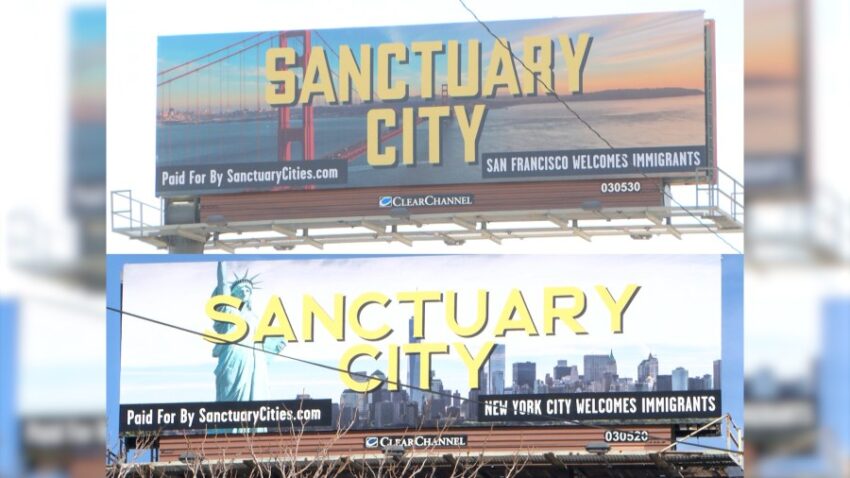
EL PASO, Texas (KTSM) – El Pasoans driving on either side of I-10 near Cotton Street, may notice two billboards describing New York City and San Francisco as sanctuary cities that welcome migrants.
“So, these billboards, we’re seeing it as a form of misinformation. It’s really just disingenuous in nature because on one hand, it’s really encouraging migrants to come to San Francisco, but it’s not actually having any resources to connect folks to that,” said Co-President of the San Francisco LatinX Democratic Club.
Sanctuarycities.com is a mysterious website responsible for putting up the billboards. In the website’s homepage, it promotes that sanctuary cities offer “ample” social services and healthcare, and that migrants can have the ability to “live, work, and enjoy life with a lower risk of deportation.”
“It’s also very misleading in the sense that sanctuary cities are going to provide those resources in the get go, when the sanctuary ordinance only really protects government employees from working with federal agencies to turn people over if they’re undocumented because of documentation status,” said Ortiz.
New York and San Francisco are in fact designated as sanctuary cities. These cities earn that designation when they issue ordinances that limit the resources offered to federal agencies like ICE, who are seeking information about people as they try to enforce federal immigration law.
However, Ortiz explained that cities such as San Francisco may not be equipped to offer migrants these services.
“They’re coming in with these hopes that San Francisco is going to be able to give them food, housing, all these other services available for them. When in really it actually may not be the case, given that we have a mini crisis in our city like a homelessness crisis, mental health crisis. So, it actually potentially is going to compound the issues that are already here further.”
Ortiz added that migrants can end up finding themselves in a dangerous spot when they arrive at these cities.
“If people come in and they don’t have a housing available opportunity, they’re going to become homeless. If they don’t have access to medications and health care, that can also become an issue,” Ortiz said.
KTSM reached out to sanctuarycities.com via email to request an interview, but they did not respond.
Read: Read More