



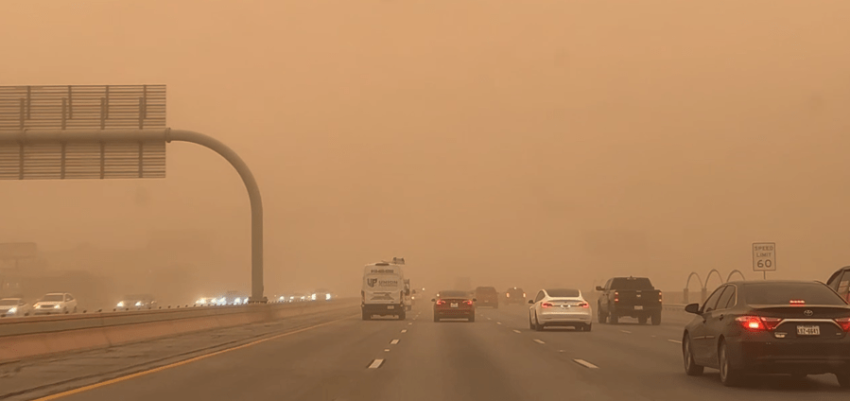
EL PASO, Texas (KTSM) — An environmental sciences professor at the University of Texas at El Paso (UTEP) said recent dust events in the Borderland are occurring at an extreme rate and urges people to treat them as more than just a nuisance.


“I’ve been monitoring the dust levels in El Paso for at least 20 years, and I would say the last week and a half, two weeks, are about the worst set of dust storms that we’ve had in the last ten years at least, maybe 20 years or longer,” said Professor Thomas E. Gill. “This has been one of the most intense and thick stretches of dust. It seems like every other day that we’ve had [dust storms].”
Gill said the Borderland might not even be through the worst of it, considering peak dust storm season typically occurs during the month of April.
“We still have the vast majority of March left to go, as well as April into May, where we can get these extensive dust storms. So, it does not bode well that it will stop anytime soon. And so, I think we have to keep being prepared.” Gill said.
Gill said that while people in the Borderland might be accustomed to these dust storms, he urges them to treat them seriously. He encourages people to change plans, if possible, to avoid the outdoors during dust storms and to wear a face mask outside.
“Be aware of any aftereffects to your eyes, to your respiratory tract and so on. It’s a nuisance, yes, and here in the Borderland, we’re used to it, but it does certainly impact our economy and the economy of every place that these particles blow,” Gill said.
Gill and other researchers at UTEP, George Mason University, and the U.S. The Department of Agriculture published a study last month outlining that dust storms and wind erosion cost the United States economy about $154 billion in annual damages.
Gill and his colleagues base their estimates on data from 2017, the year with the most complete sets of information available and an average level of dust activity.
The study compiled the costs of wind erosion across several sectors of the economy, including health care, transportation, agriculture, renewable energy, and households. Gill noted however, that their study does not even factor in other elements that haven’t been calculated.
“By the time we added these estimates up and we ran the numbers, we were over $100 billion, which really surprised us because we know, in fact, that there are a lot of economic impacts of dust storms that have not been calculated. We know that we didn’t even hit all of the costs, and yet it’s still really high,” Gill said.
Gill said the study will help serve as a starting point for him and other researchers to begin expanding and improving data collection, which will allow them to develop a more comprehensive understanding of the effects of wind erosion and dust storms on the U.S.
 Read: Read More