



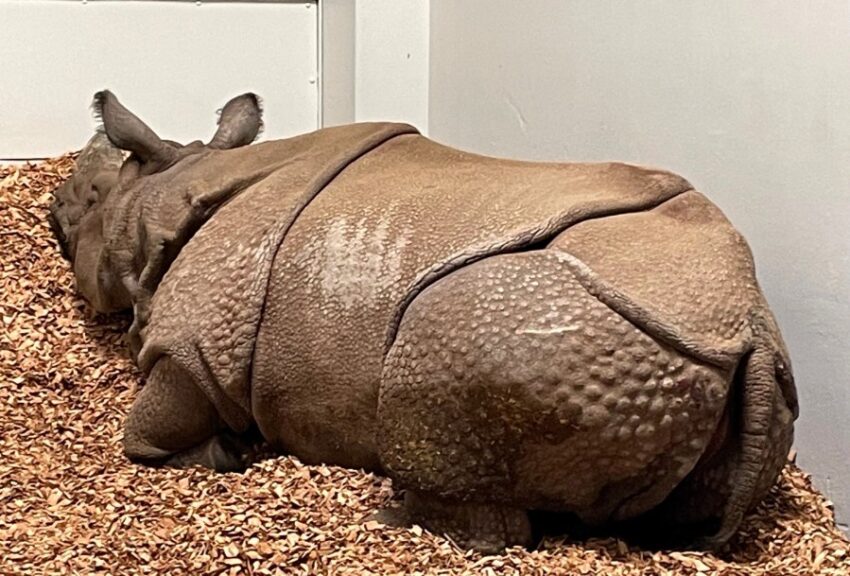
EL PASO, Texas (KTSM) – A rhinoceros is now part of the El Paso Zoo and Botanical Gardens family, according to a press release sent by the City of El Paso.
Photos courtesy of the City of El Paso
The city says the zoo is welcoming a 7-year-old greater one-horned rhino named Taj, “crown” or “jewel” in Hindi, from the Woodland Park Zoo in Seattle. He just turned 7 in November and weighs a mighty 4,670 pounds. He was born in 2016 at the San Diego Zoo Safari Park.
Taj traveled in a custom-made crate inside a climate-controlled truck driven by an expert who specializes in moving rhinos. A Woodland Park Zoo curator and a rhino keeper followed behind along the 1,700-mile road trip, according to the city.
The move was recommended by the Species Survival Plan for greater one-horned rhinos. The Association of Zoos & Aquariums’ Species Survival Plans are conservation breeding programs across accredited zoos to help ensure healthy, self-sustaining populations of threatened and endangered species.
“The El Paso Zoo is very excited to have Taj in our family and what this means for the future of the Zoo in breeding and conserving these magnificent animals. All Rhinos are in great jeopardy in the wild and we are very fortunate to get Taj as he is highly ranked in the breeding priority list. Eventually, we will be bringing in a few females to join Taj and hopefully then adding new Rhinos to the population,” said El Paso Zoo and Botanical Gardens Director Joe Montisano.
The city says Taj will not be immediately available for public viewing until he gets acclimated to his surroundings and animal care specialists.
During the transition, zoo experts will begin introducing him to his exhibit next to the Asian elephant Savannah. After a medical exam, and settling in, Taj will share the exhibit in Asia with Savannah, but they will not have contact together.
The city says the greater one-horned is second in size only to African white rhinos. These animals have a single horn that is about 8 to 25 inches long, and a gray-brown hide with skin folds giving them an armor-plated appearance.
Once found across the entire northern part of the Indian subcontinent, the population rapidly declined to fewer than 200 in the 20th century due to sport hunting, human conflict, poaching for their horns (which are used in non-traditional medicine), and habitat loss, according to the city.
Read: Read More