



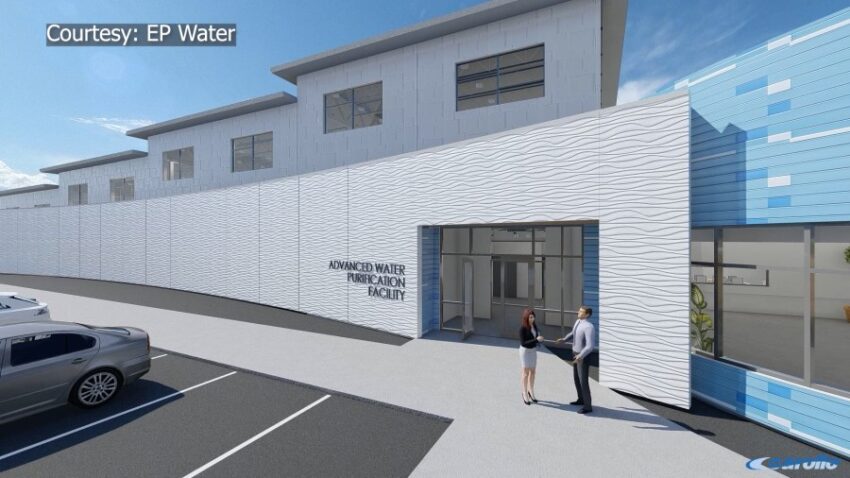
EL PASO, Texas (KTSM) — El Paso Water will soon add wastewater as a source of drinkable water, furthering their efforts to make the Borderland drought-proof.
“Wastewater is becoming incredibly valuable to desert communities all across the west. It’s being used for irrigation, golf courses and irrigation parks. That’s the first step that you would take and then you start looking at the purified concepts,” said water resources manager for EP Water, Scott Reinert.
Reinert explained that they will always look first at how much river water supply the Rio Grande will offer in any given year and use however much they can, but as El Paso continues to experience severe droughts year over year, they have to continue innovating.
“The technology is there and the effluent resource in your community is there. So now we want to take advantage of that, and that’s what El Paso’s going to do with this purified water project,” Reinert said.
EP Water’s Advanced Purified Water Project has been in the works for over a decade, and will officially launch in early 2025 when they begin construction of the new facility that will transform already treated water from the Roberto R. Bustamante Wastewater Treatment Plant, into drinkable water.
“We’re going to start with irrigation reclaimed water and then treat it more and so that it will be suitable for drinking,” Reinert explained.
The water will be purified at the facility through a “rigorous four-step process:”
Membrane technology
Reverse osmosis
Ultraviolet disinfection with advanced oxidation
Granular activated carbon filtration
EP Water already completed a successful pilot test of the process back in 2016, at their Wastewater treatment plan.
According to EP Water, the facility will produce up to 10 million gallons of purified water per day, and allow them to continue to conserve the Hueco Bolson Aquifer.
When the facility is up and running, EP Water will have four sources of drinkable water. They currently rely on fresh and desalinated groundwater, and river water from the Rio Grande.
El Paso’s river water comes from melted snowpack from Southern Colorado and Northern New Mexico during wintertime that is stored in a water dam in Elephant Butte.
The water supply released into the Rio Grande this year reached a threshold not seen in over a decade. But with an expected dry summer in 2025, EP Water is having to prepare for possible severe-drought conditions, according to officials.
“This year we had a full supply, next year with our estimates, we believe the (river water supply) is going to be limited again,” Reinert said.
Reinert explained that this project will continue to place EP Water at the forefront of innovation, as they already operate the largest inland desalination plant in the world, the Kay Bailey Hutchinson Desalination Plant.
“We’re a big city in the desert and by that we have to be innovative with what we have in order to maximize it,” Reinert said.
According to EP Water, this will be the largest direct potable reuse project in the country.
Reinert explained that like with their treated river and groundwater supply, customers won’t be able to taste a difference but says rates will increase as they develop and improve their systems to meet the challenges of the borderland.
“As we go into the future, water-supply projects that we’re preparing for will cost more money, and we expect to have to pay for those with rate-increases , but we’re always mindful of our customers and affordability,” Reinert explained.
EP Water expects the facility to be completed approximately at the end of 2026 or start of 2027.
Read: Read More