



“Know that I was born, by the will of heaven, in this our iron age, to revive the one of gold, or the Golden Age, as it is called,” declares Don Quixote in Miguel de Cervantes’s 1605 epic of the same name. “I am he for whom are reserved dangers, great deeds, valiant fears.”
Don Quixote is a collection of madcap, misguided adventures that is considered to be the first modern novel. Famously, it also satirizes the tales of chivalry that were popular in its era. The novel’s hero is obsessed with these stories of knights and damsels in distress and insists on seeing the world around him as such a noble quest.
Decades before Don Quixote, there was Álvar Núñez Cabeza de Vaca. Born in 1490 in Jerez de la Frontera, Spain, in 1527 Cabeza de Vaca departed Spain as part of a five-ship, 600-man crew sent to the New World to conquer and govern Florida and the Gulf Coast.
Things didn’t go as planned. Hurricanes in Hispaniola and Cuba took two ships and two hundred men. Upon arrival in Florida, the expedition divided into two groups, one overland and one seaborne. Between attacks by Native Americans, disease, starvation, and more storms, all but 80 men in Cabeza de Vaca’s land-exploration group died.
Then, after an attempt to sail from the Mississippi Gulf to Galveston Island on makeshift rafts, the majority of the 80 survivors were enslaved by Karankawa and Coahuiltecan peoples. Cabeza de Vaca and three others—including one slave named Estevanico, who is considered to have been the first African in Texas—escaped and continued onto what is now northern Mexico, Texas and the U.S. Southwest, moving on foot between the various peoples of the region for eight years. In 1536, Spanish slavecatchers would eventually discover him in San Miguel, Sinaloa. Whether or not Cabeza de Vaca believed himself to be a knight-errant, like Don Quixote, errant wandering chose him.
In 1542, back in Spain, Cabeza de Vaca published an account of his wanderings, now known under its 1555 title of Naufragios, meaning “shipwrecks” or “castaways.” Like Don Quixote, the narrative advances in brief episodes, and each bears a short descriptor: “In which the stupendous battle between the gallant Basque and the valiant Manchegan is concluded and comes to an end,” in Quixote’s case; “Of the fright that the Indians gave us,” in Cabeza de Vaca’s.
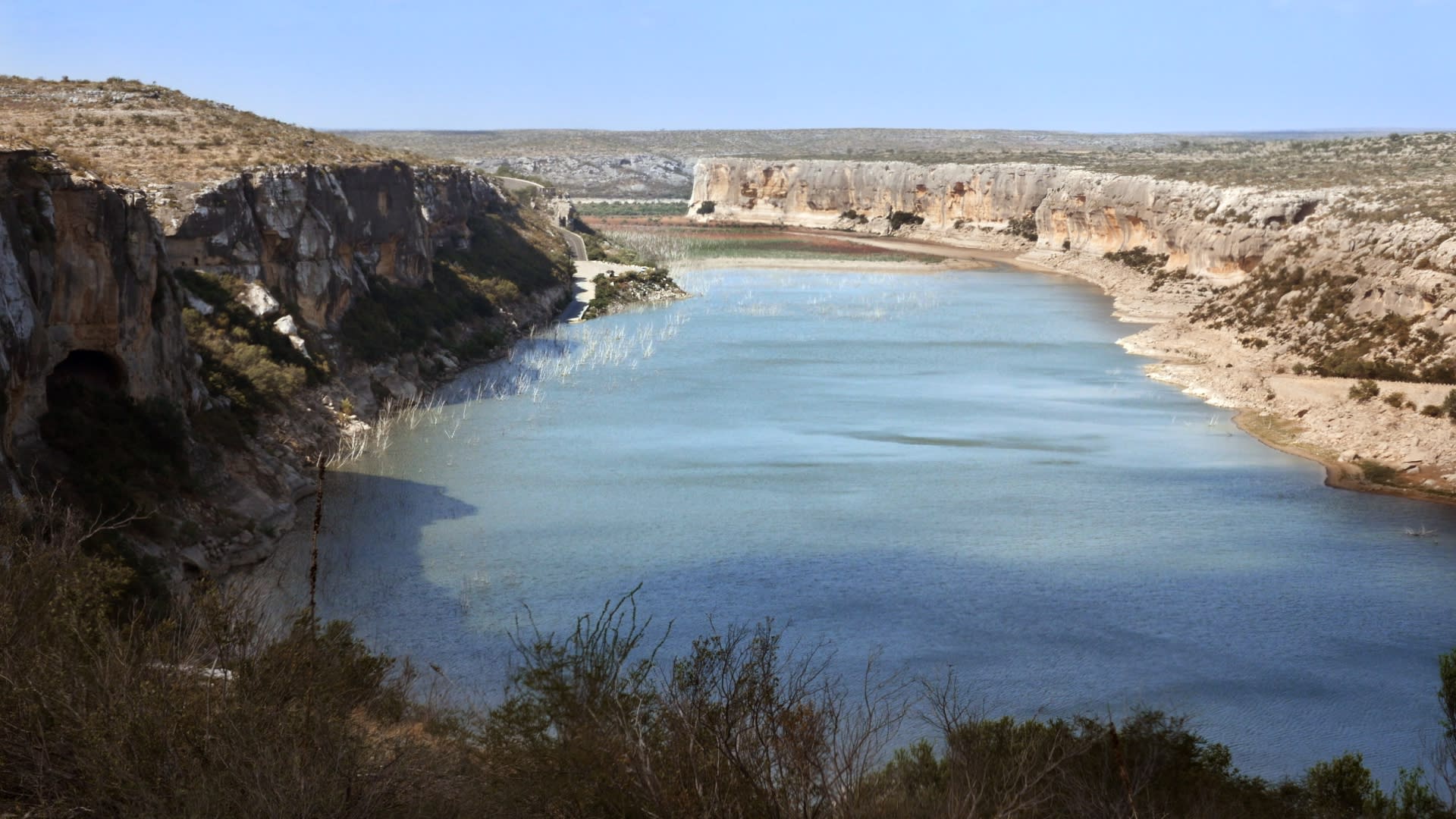
In certain ways, Naufragios is a descriptive account of the people and environments that Cabeza de Vaca encountered. Historians have pieced together his route based on its descriptions of rivers and plants like mesquite and piñon. In other ways, it shares Quixote’s fantastical and grandiose lens on the world. He presents the Native Americans alongside whom he lived as aloof and unknowable, people with alien customs frozen in an earlier time. Over the course of the journey, the Native Americans begin to treat Cabeza de Vaca and his companions as healers, and they accept this role with little hesitation.
“Another day in the morning many Indians came here and they brought five sick people who were sore and in very bad shape…when morning came, all of them woke up so healthy and well, and left so strong that it seemed that there had never been anything wrong with them.” Just as Don Quixote decided that he was assigned from on high to revive chivalry, so Cabeza de Vaca and his fellow travelers determined that they were meant to be healers to the heathens.
Observing these similarities, a curious relationship between art and life emerges. In the age of exploration, the explorers metabolized the tales of gallant adventurers and saw their own lives as similar journeys. In turn, yarn-spinning writers transformed the explorers’ “true” accounts into new stories of errancy and discovery. Dispatches from the New World and fictions of the Old World were intertwined. Scholars have even documented that the conquistadors brought tales of chivalry with them to the New World—including Don Quixote’s favorite book, Amadís de Gaula.
We don’t live in an era of discovery anymore. Some people say we live in the “anthropocene,” in which humans have impacted Earth so gravely that its geology has changed. Others refer to living in the planet’s “sixth mass extinction.” Tales of heroic adventure don’t capture the aura of our age: instead, recent road trip novels of the American Southwest like Lost Children Archive and Elegy, Southwest frame themselves explicitly as elegies. They mourn the losses provoked by U.S. colonialism of Native Americans, of climate change, and of cruel right-wing immigration policies.
Nevertheless, in this era of loss and unsettling change, documentary filmmaker David Fenster looked to Cabeza de Vaca. This year, Fenster has been making all of his films available to watch for free on YouTube, including the 2017 Opuntia.
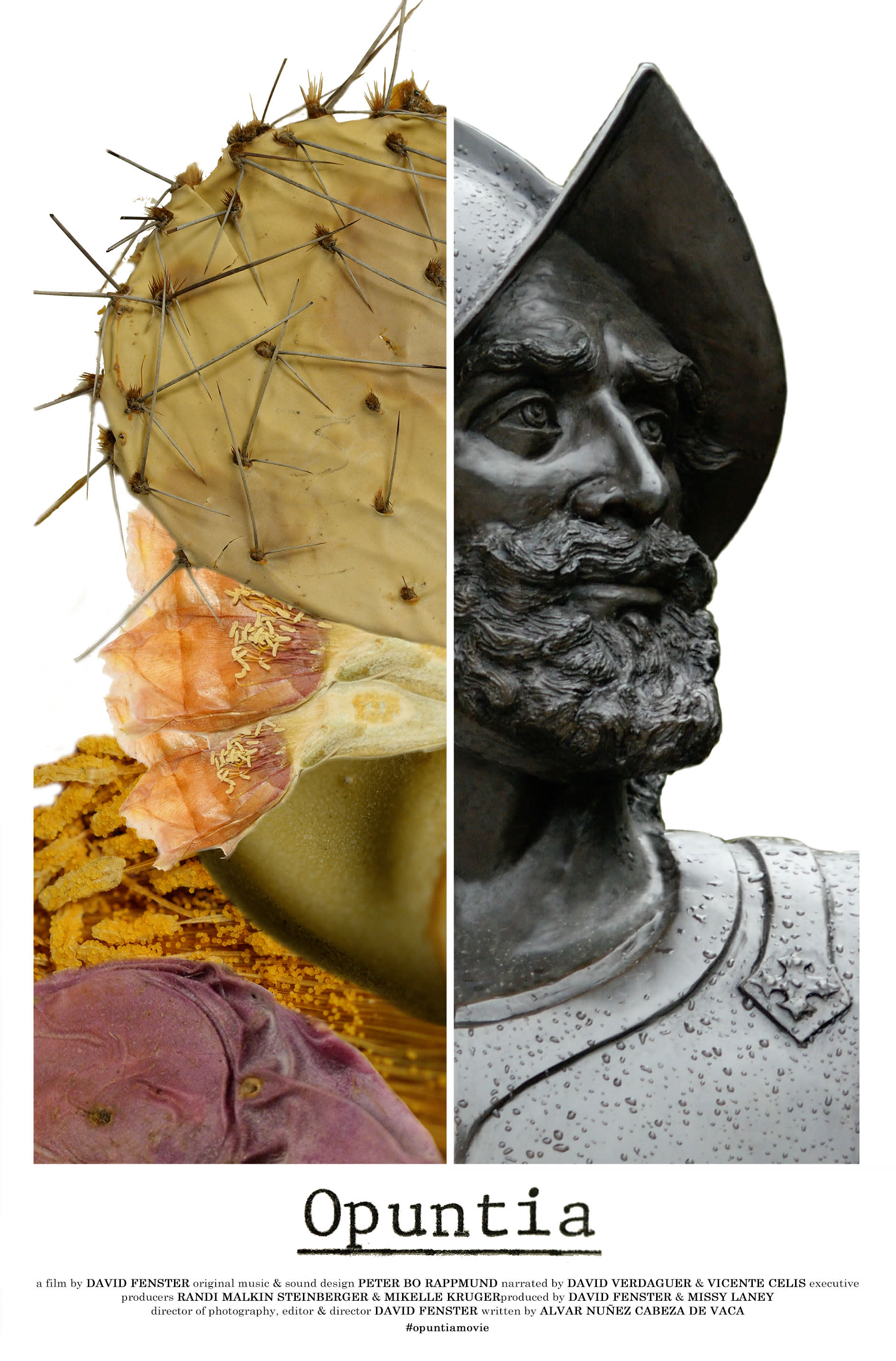
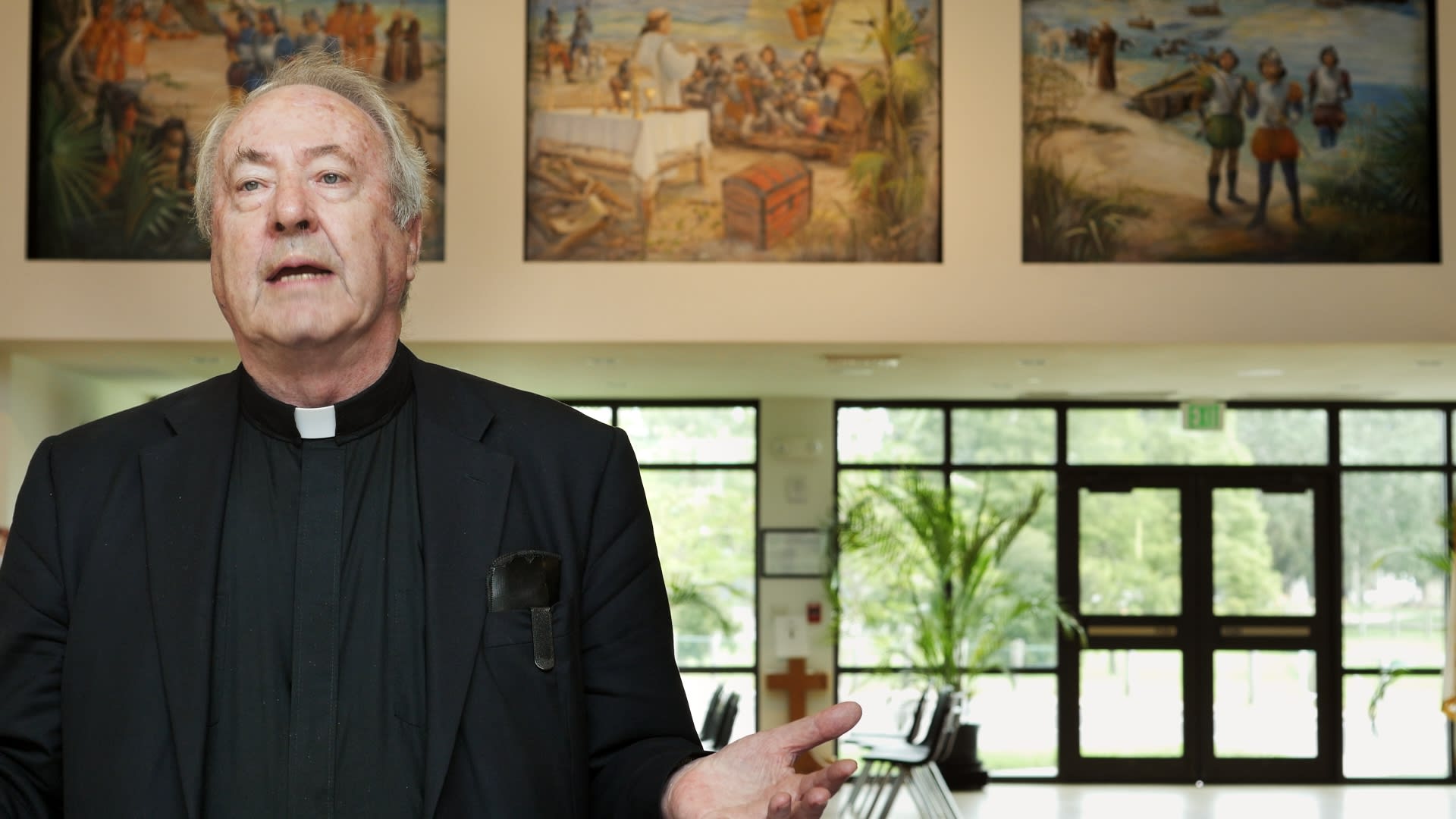
Opuntia opens in St. Petersburg, Florida, with the sounds of waves hitting the shoreline and cars on the highway. It soon enters the lush setting of an “ancient Indian village” whose commemorative plaque claims that Cabeza de Vaca’s journey launched from its site. The pianist of a group practicing chanting tells the camera that he is a direct descendant of Cabeza de Vaca. “He really had an explorer’s mind,” the man says. “He just didn’t come here to conquest, he was looking for information…about the plants, the animals, what was going on with the people.”
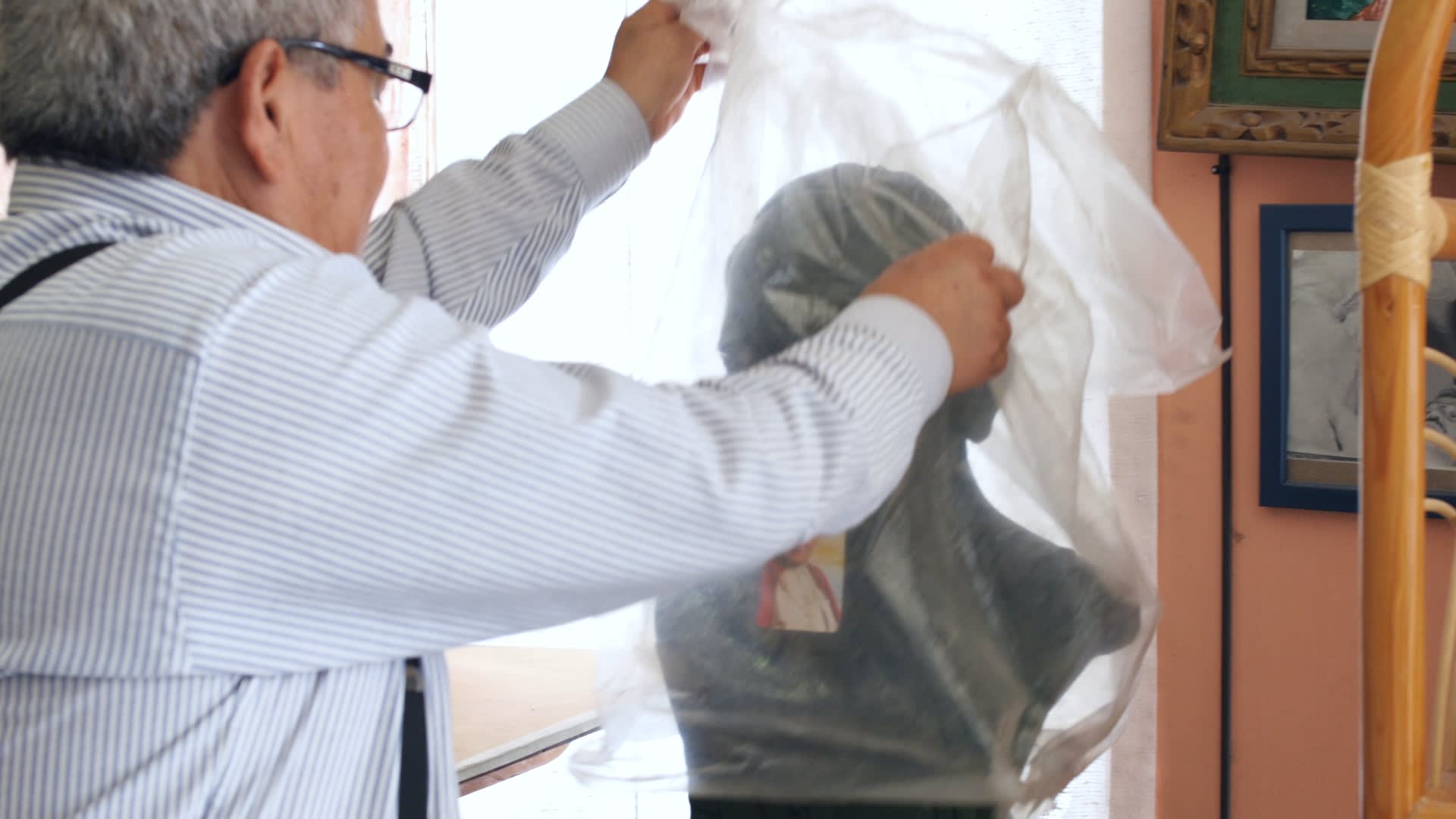
With a delightfully odd assortment of images—star fruit growing on a tree, a seat-back plane tracker map, a water witch—the documentary moves along Cabeza de Vaca’s path, at least in the form that modern-day Americans have claimed it. In Houston, a monument states that Cabeza de Vaca’s journey was the beginning of “the modern history of Texas.” In Presidio, Texas, a man displays his first-edition copy of the explorer’s account, adding that he finds the book “wonderfully homoerotic” given how often the shipwrecked conquistadors end up losing their clothes. In Redford, Texas, a descendant of the Jumano people explains how Cabeza de Vaca’s account provides a record of the customs of a people considered to have disappeared or assimilated. In Ciudad Juárez, Chihuahua, the sculptor of a statue of Cabeza de Vaca reticently agrees that “of course” he feels “the satisfaction of getting to do an homage.”
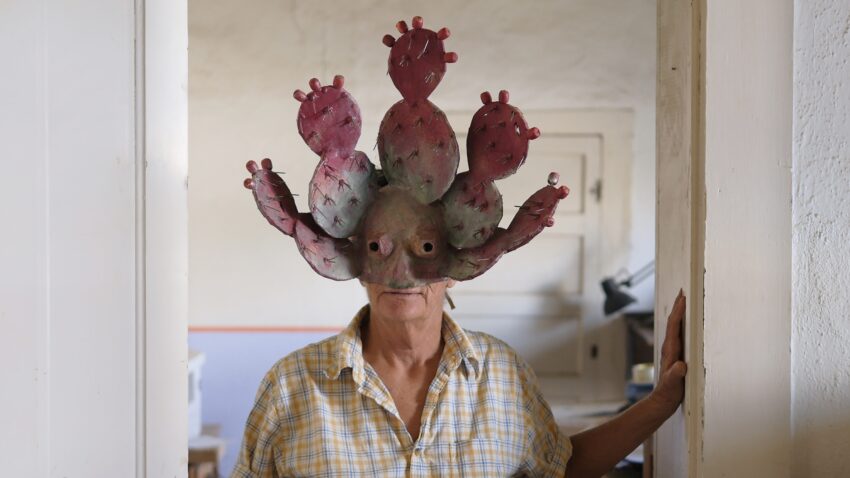
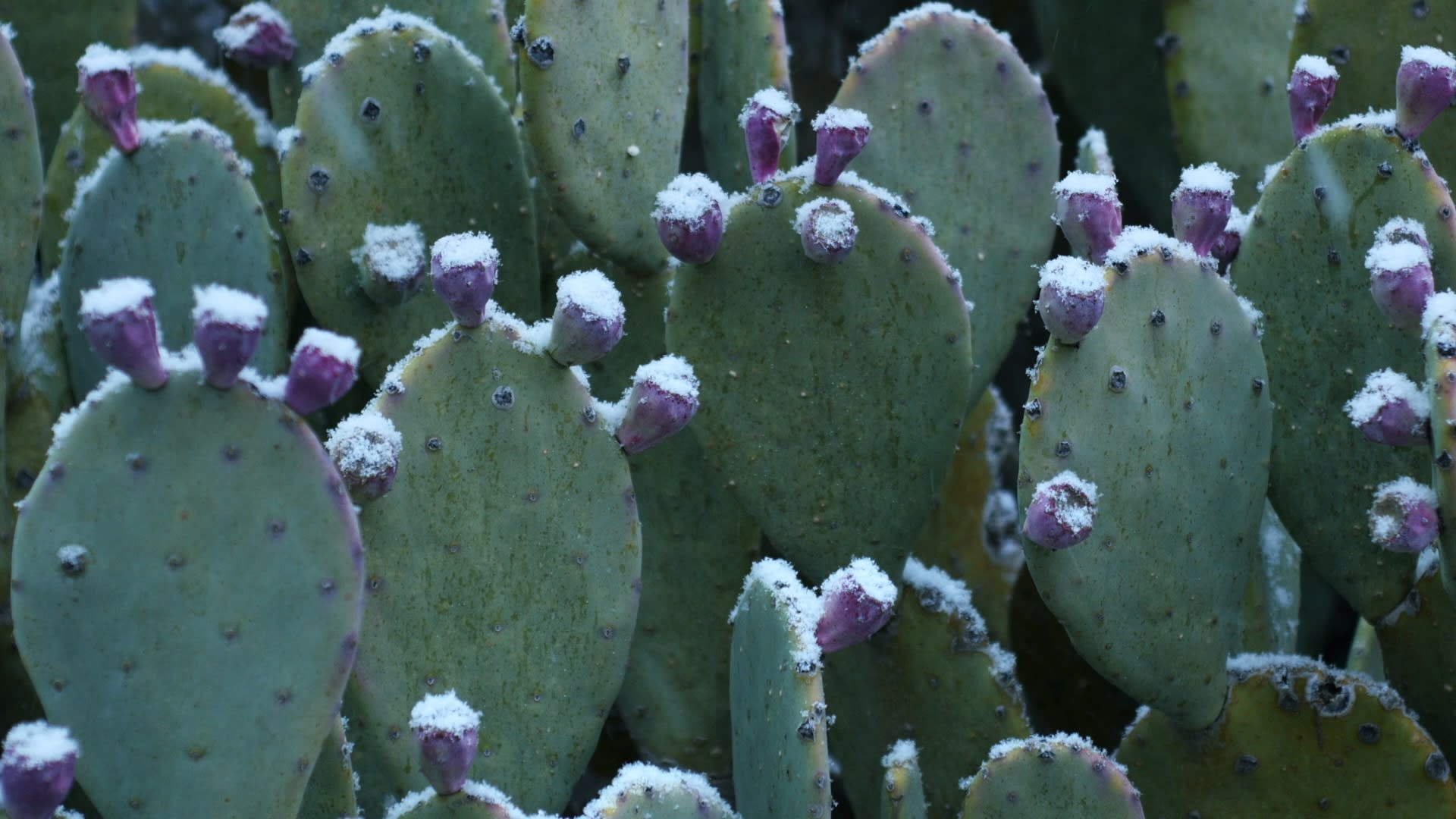
The voice of Cabeza de Vaca is interspersed throughout these scenes, a deep, formal European Spanish sometimes accompanied by images of spinning cactus plants. Much of his voice-over narration is drawn from Naufragios. But some of it is unfamiliar. He speaks of having been reincarnated in all the Opuntia cactus of the world, and the image of a spinning penca, or cactus pad, sometimes appears in the frame.
Opuntia’s second half, titled “The Land of the Dead,” tracks this spiritual side of Cabeza de Vaca’s imagined journey. Fenster visits a medium to ask why Cabeza de Vaca is inside all Opuntia. “He’s there because you need him to be there,” the candle-illuminated medium replies, “but he, like all beings, is myriad.”
Cabeza de Vaca’s narration in this section is also pensive. “A strange feeling overtook me,” he narrates, “as though the world around me had turned into a shadow…or perhaps…I had become a shadow.” He says that upon returning to Spain, he discovered that his father was close to death—and that, to his sad surprise, he had lost the gift of healing that he had practiced so fruitfully among the Native peoples of America.
There, the film snaps back to reality. An elderly man appears, lying curved in bed. Fenster asks him questions, and it becomes clear that it is his own father. He asks him to contemplate death. At first, the man answers wryly. But when he stops resisting the earnest questions, the scene becomes moving. When Fenster asks him how they will spend time when he visits him from beyond the grave, he replies, “What we usually do. Not much, but we have a connection.”
Eventually, Fenster’s questions end and another spinning cactus covers the frame. Where there has been little soundtrack to most of the film, a piano accompanies the footage of the final minutes: snow falling on Opuntias, cactus fruit decomposing on the ground, bugs eating the tunas. The sequence lasts five minutes, a length necessary to rest from and synthesize everything that has led up to it.
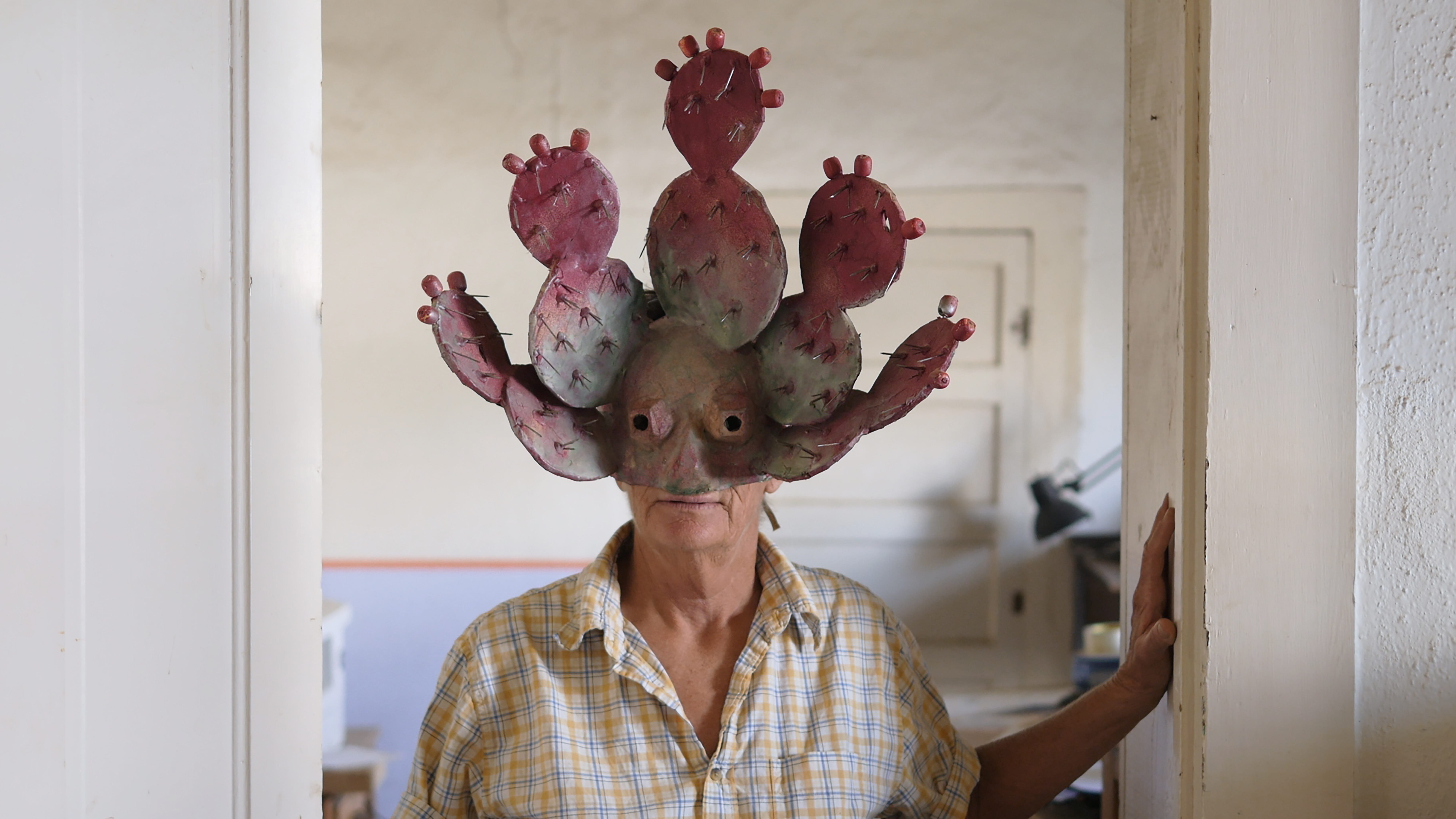
Like Cabeza de Vaca’s account, Fenster’s narrative of Cabeza de Vaca’s geographic and personal journeys is a tale infused with other tales and a product of its era’s manner of storytelling. Fenster adapts Cabeza de Vaca, making him brooding and mystical in a way that transcends his professed Catholicism. It’s a Cabeza de Vaca for a reflective moment in history, rather than one energized with the promise of the conquest of terrae incognitae. Yet it does so without losing the pleasurable strangeness that Cabeza de Vaca finds in discovery. The film mixes documentary and imagination to create a new emotional world, combining curiosity and estrangement with the weight of elegy.
 Read more: Read More