



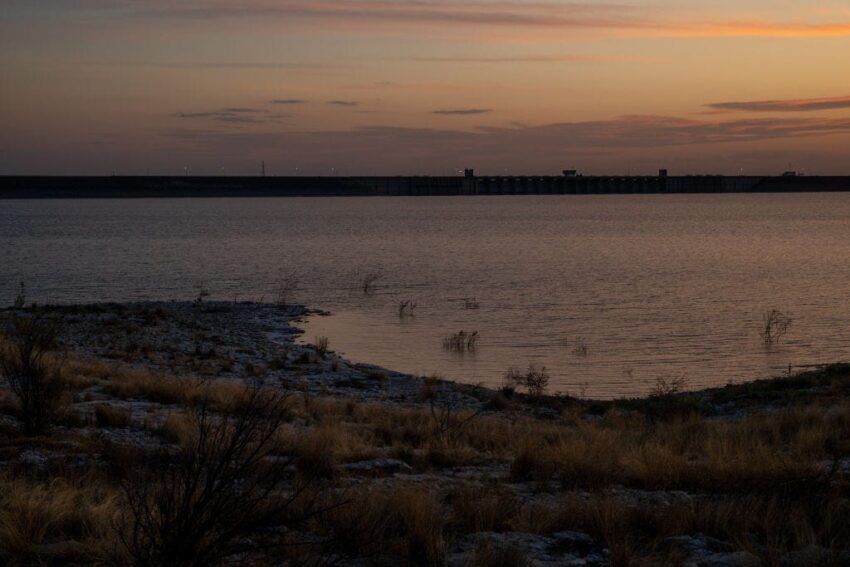
The Rio Grande, known as the Río Bravo in Mexico, extends nearly 2,000 miles and serves as an international boundary. It’s also one of the most endangered rivers in the world. This is owing to pollution, climate change, and booming population growth, as well as to both countries’ heavy reliance on the river for irrigation. A complex system of treaties and agreements between Mexico and the United States ensures that each country gets its share of the river’s water, but what happens when the water isn’t there? This is the looming crisis that both countries now face. And it’s especially dire for border communities that rely solely on the Rio Grande.
Kathy Robb, an expert in water policy, was commissioned by the binational International Boundary and Water Commission, which oversees the river’s management, to work with border residents, experts, and officials on both sides to figure out how to save the river. She sought to understand how stakeholders kept the Colorado River viable, since it is also a deeply contested and overallocated water source. The result is Robb’s 2022 report, which incorporated candid comments from stakeholders to come up with a list of solutions. The report is fascinating and could serve as a roadmap as the situation grows more dire on the Rio Grande.
But will politicians follow the report’s guidance? In May a bipartisan group of U.S. legislators and congressional representatives from Texas threatened to withhold funds from Mexico if it didn’t release more water into the Rio Grande watershed for use by U.S. farmers.
“I’m sorry that it’s come to this,” said Senator John Cornyn (R-Texas) on a press call. “If Mexico had in good faith worked with us, we would have welcomed that.”
Mexico must send an average 400 million cubic meters of water to the Rio Grande each year, over five-year periods. This is required under the 1944 U.S.-Mexico Water Treaty, in exchange for the water that the U.S. provides Mexico in other parts of the border.
But even as the Texas Commission on Environmental Quality has said it is “hydrologically impossible” for Mexico to make those payments because of drought, and even as the 1944 treaty allows Mexico’s water debt to “roll over” to the next five-year cycle (which begins in October 2025), U.S. politicians’ pressure on Mexico is escalating.
Last week the House Committee on Appropriations cemented the threat in its fiscal year budgetary bill, which will now go to the Senate.
The bill’s language allows the Senate Appropriations Subcommittee on State, Foreign Operations, and Related Programs to defund the binational International Boundary and Water Commission in Mexico, which needs those funds to improve the infrastructure necessary to address the water shortage—unless Mexico “balances” the water share.
When asked in the press call how withholding those funds would incentivize Mexico to release the water, Cornyn said, “We are more than happy for this to be a negotiated outcome. But we’re running out of ways to get the attention of the Mexican government. And I believe that this is one necessary step we need to take.”
In this interview, Kathy Robb talks about the making of her report and her solutions-oriented findings for managing the binational Rio Grande river basin.
Read more: Read More