




When Congress approved the One Big Beautiful Bill Act in July 2025, it included the Workforce Pell Grant provision. This would pay for students to enroll in short-term, career-focused, non-degree training programs, and provide employers with a larger pool of qualified applicants.
A year later, the anticipation has leveled off as reality – including the procedures and stipulations – have led to cautious optimism for a fall 2026 “pilot” launch of what some educators have called the most dramatic expansion of post-secondary education grants in 50 years.
While the initial application deadline was June 19, Texas Gov. Greg Abbott announced Friday an extension to give colleges and technical schools more time to suggest Workforce Pell-eligible programs. There is no new closing date so submissions will be accepted on a rolling basis, a Texas Higher Education Coordinating Board spokeswoman said.
THECB Commissioner Wynn Rosser said in a July 24 news release that the state’s higher education institutions had a “positive response” to the Workforce Pell program. To date, higher education institutions have submitted more than 60 programs for consideration, according to the Coordinating Board.
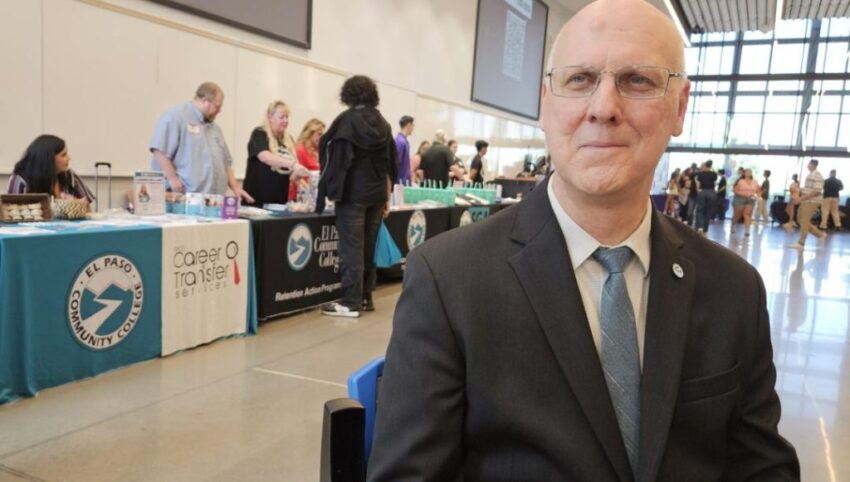
El Paso Community College’s Blayne Primozich sees Workforce Pell as an opportunity, but acknowledges that the process will be slow due to regulations imposed by the state and federal governments.
Primozich, associate vice president for workforce and continuing education, said the college submitted two programs last month to the THECB for its consideration – phlebotomy and certified nursing assistant. Phlebotomy is the practice of drawing blood, and CNA prepares students to be entry-level healthcare professionals who provide direct, hands-on care to patients.
The coordinating board, in collaboration with the Texas Workforce Commission and the Texas Workforce Investment Council, will evaluate the programs and decide which ones go to Abbott’s office. The programs that they accept will be sent to the U.S. Department of Education for its approval. After that, the state institutions can offer the Workforce Pell Grants to qualified students. The coordinating board has said that this process will last months.
“I think like all programs that get rolled out by the federal government to the states, there’s a learning curve,” Primozich said.
Workforce Pell is an addition to the traditional Pell Grant program established in 1965 to help low-income students attend college. The Trump Administration has proposed $40.8 billion for Pell Grants in fiscal year 2027, which begins October 1.

Bill DeBaun, senior director for Data and Strategic Initiatives at the National College Attainment Network, predicted Workforce Pell would be a very small slice of the overall Pell pie because of the uncertainty of the number of eligible programs in the early stages. He said the launch will vary widely among the states.
“I do expect a slow rollout in most places, not just because of programs being able to meet the eligibility requirements but also because of state and institutional perceptions of whether the juice is worth the squeeze here for the size of the Workforce Pell grants and the number of students who will pursue them,” DeBaun said as part of an email interview.
Open Campus, a national nonprofit news group that focuses on higher education, reported earlier this month that the Congressional Budget Office estimated that 100,000 new students eventually will receive funds – approximately $2,200 per student – for Workforce Pell.
Each program must have met the program’s strict criteria. For example, institutions must be accredited, and programs must last from eight to 15 weeks and have instruction time of 150 to 599 clock hours, must have been in operation for at least a year, lead to a credential aligned with a high-skill, high-wage and in-demand job.
The individual institutions such as EPCC must track the outcomes of these students to remain eligible. For instance, programs must maintain a greater than or equal to 70% completion rate and a greater than or equal to 70% job placement rate within 180 days of graduation.
Primozich, who has some political science background, said he expects federal officials to revise some of the program’s rules, and for state leaders to refine the parameters of eligible programs after the first wave of applications and approvals. He suggested that the coordinating board initiate discussions with college representatives to revise some of the processes and requirements.
Barbara Kessler, a THECB spokeswoman, said the coordinating board had worked with colleges since last spring to prepare them for Workforce Pell. The help included online guidance, informational webinars, and a web page with Frequently Asked Questions.
Kessler wrote in an email to El Paso Matters that the coordinating board continues with the approval process of the submitted programs. She said many involved healthcare, advanced manufacturing, transportation and information technology.
The THECB has a list of occupational categories and programs of studies that go from accounting to wine steward.
Kessler did not respond to questions about the college concerns about Workforce Pell and the timeline of when the Texas programs would be sent to the Department of Education.

Grace Atkins, a policy adviser with Texas 2036, said the state was ahead of many of its peers as far as short-term and long-term implementation of Workforce Pell. Texas 2036 is a nonpartisan public policy think tank based in Austin.
Atkins said the coordinating board has done substantial work in the short term to establish application guidelines and eligibility requirements. For long-term implementation, the Texas Legislature passed a law last session that required expanded workforce data collection.
“While that data system is still being built, the statutory foundation puts Texas ahead of many states because more detailed workforce data will be essential to evaluating programs and implementing Workforce Pell in the years ahead,” said Atkins, who concentrates on postsecondary education and workforce development issues.
Primozich was skeptical that the program would be ready for a fall 2026 semester launch. He advised students to consider other financial aid programs such as the Texas Public Educational Grant. It is a needs-based program administered by higher education institutions. Colleges can award up to 50% of the tuition for non-credit certificate programs.
To be eligible, students must fill out the FAFSA, or the Free Application for Federal Student Aid. The federal government will send students a note that the program is not covered by a Pell Grant, but the students will need to show their college that they were Pell eligible. The verification will qualify the student for the TPEG program.
Before he retired earlier this year as EPCC’s vice president of Instruction and Workforce Education, Steve Smith talked about Workforce Pell and its impact on students and employers. He said making short-term programs eligible for Pell funds will generate “explosive growth.”
“I think it’s going to be huge,” Smith said.
The post EPCC awaits decisions on proposed programs to earn Workforce Pell Grants for job training appeared first on El Paso Matters.
Read: Read More