



JUAREZ, Mexico (Border Report) – It was 30 years ago that Zoila Velasco’s parents said goodbye to friends and family in a village in El Salvador. The Velascos spent the remainder of their productive years in the U.S. Some of their children and grandchildren eventually joined them.
Velasco, too, was looking forward to life in the United States next to her elderly parents. She had a December 17 asylum appointment at an El Paso, Texas, port of entry. Things did not go well.
“It’s sad and its difficult,” Velasco said. “I feel depressed. I lost my appetite. I will try another (immigration) process, see what happens. (But) I already saw myself on the other side. It wasn’t to be, God knows why.”
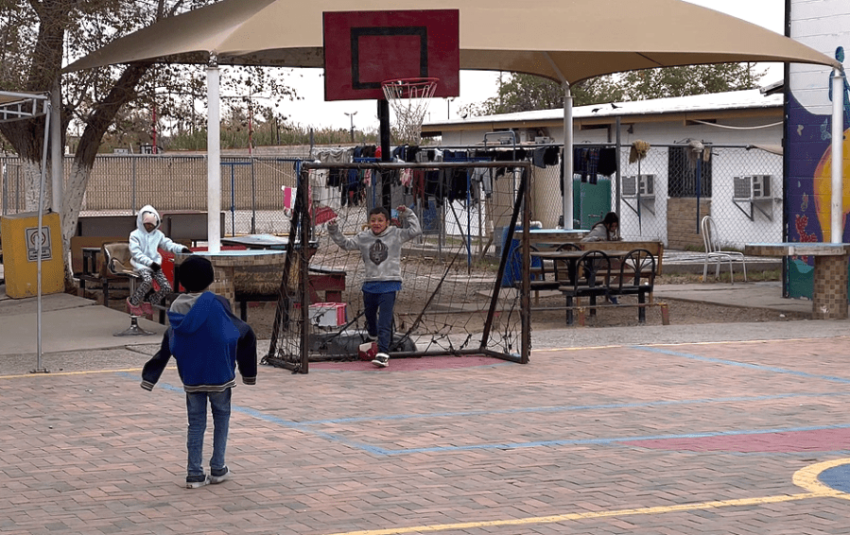
Living in a dormitory of a west Juarez migrant shelter, Velasco ponders her options amid widespread fears that lawful pathways for migrating to the U.S. will dwindle further when President-elect Donald Trump takes office on Jan. 20.
Good Samaritan shelter already is filling up with those who couldn’t get across and others rushing past a gantlet of Mexican checkpoints to get into the U.S. before Inauguration Day.
Shelter director the Rev. Juan Fierro fears things will get worse in Juarez if Trump makes good on his promise of mass deportations of unauthorized migrants.
“We are living different times because the National Migration Institute and the National Guard are preventing migrants from coming to the border,” Fierro said. “But some probably will get through and arrive at the border and we will see those two trends: The ones that are coming from the south and those who will be deported from the U.S. to our northern border.”
Fierro says neither his shelter nor other church-based refuges in Juarez will have the resources to cope with such scenario. He remembers how migrants were living on streets and shelters ran out of room after Trump cracked down on migrants during his first term through Title 42 expulsions. The Biden administration continued the policy through 2023. And, at its conclusion, issued an executive order curtailing asylum between ports of entry with a few exceptions.
“We will have to attend to all those people with the (limited) resources we have. We are not prepared for that type of a situation,” Fierro said.
On the opposite side of the city, Tito Balderrama remains confident he will be admitted to the United States on humanitarian parole before Trump takes office. If not, he hopes the new tenant at the White House listens to the throng of economic experts who say migrants are good for the U.S. economy.
“Mr. President, we will be grateful if you look into your conscience and let us pass so we can help our families. We are not bad guys; we want to work,” said Balderrama, a Venezuelan staying at Casa del Migrante shelter. “I know some bad things are happening in the United States, but it is not our fault. Every human being is different.”
He was referring to earlier incidents in which migrants who allegedly hid their association with the Tren de Aragua gang in Venezuela came into the United States and engaged in violent acts. In Juarez, two Venezuelan migrants earlier this week were charged with beating to death a Mexican immigration officer at a checkpoint 30 miles south of the city.
Balderrama plans to stay and possibly find a job in Juarez if he’s denied entry into the U.S. Hiring a smuggler to get him over the border wall is not an option.
“We, as migrants, should be on our best behavior,” he said. “Here on the border, we should do good things, not bad things. We will present ourselves; we will do it properly.”
(ProVideo contributed to this report.)
Read: Read More