




No tax breaks or incentives for future data centers. That’s the basic recommendation the El Paso City Council will deliberate next week when city staff present proposed policies to guide how the city should manage new data centers within its jurisdiction.
A nearly 40-page policy memo obtained by El Paso Matters proposes the city establish binding “community benefit agreements” rather than offer incentive deals. Other rules would require a minimum distance between data centers and residential neighborhoods or ecological sites, and also require data centers to obtain a new kind of permit that would require a public process and more oversight.
“Not every project that brings investment is automatically the right fit for a desert city facing long-term challenges around water, energy, infrastructure and climate resiliency,” District 8 city Rep. Chris Canales said on a social media post.
“My proposal is about setting a clear direction for the future and recognizing that while these large data centers can generate substantial tax revenue to fund public services, they also come with very real tradeoffs,” Canales wrote.
Canales was on council in 2023 when the Meta data center deal was unanimously approved. He has since reversed his stance, stating he regrets his vote.
- LEARN MORE: El Paso Electric filings detail power plant impact behind Meta’s $10 billion data center
In a 5-3 vote, the City Council in February directed city staff to develop the framework it will consider adopting at its meeting on Tuesday, May 26.
The proposed policy framework, which echoes the backlash and public discontent with data center developments, suggests data centers could have negative environmental effects such as increased air pollution that run counter to the climate action plan the city adopted earlier this year.
“Hyperscale data centers like the one Meta is constructing in the Northeast, and the one recently announced at Ft. Bliss, will have a significant negative impact on (greenhouse gas) emissions, co-pollutants and overall air quality,” reads the policy document.
- SEE ALSO: More data centers could be coming to El Paso. What will that mean for your electric bills?
The city estimated electricity generation to power data centers would increase the city’s carbon dioxide emissions by 21% compared with a 2019 baseline.
The policy proposals include:
- Require AI data centers to obtain a special use permit rather than the “by right” permit now required. The special permit will require public disclosure and direct City Council oversight, as well as standards around distance from residential housing.
- Require data center developers to submit detailed plans covering their facility’s projected water and energy use, emissions, noise and water treatment. It also would establish performance standards and mandate developers use the most efficient cooling technologies to limit water consumption.
- Pause on any tax incentives for AI data centers and instead prioritize community benefit agreements that require legally binding commitments from developers to fund certain community projects, workforce education or neighborhood programs.
- Seek greater oversight and transparency of data centers’ water and energy usage and ensure costs aren’t shifted to existing utility ratepayers.
The city’s overarching strategy is largely centered around negotiating benefits from data center developers instead of outright rejecting data centers – an approach other communities are taking to their benefit, said Lauren Keeler, an associate professor at Arizona State University who researches innovation and sustainability.
“There’s an opportunity … through things like community benefits agreements to channel some of the wealth that’s being generated by this creation of data centers and the expansion of AI to communities to get funds to do projects that communities want,” Keeler said. “It doesn’t have to just be, ‘Yes,’ to hosting a data center, or ‘No’.”
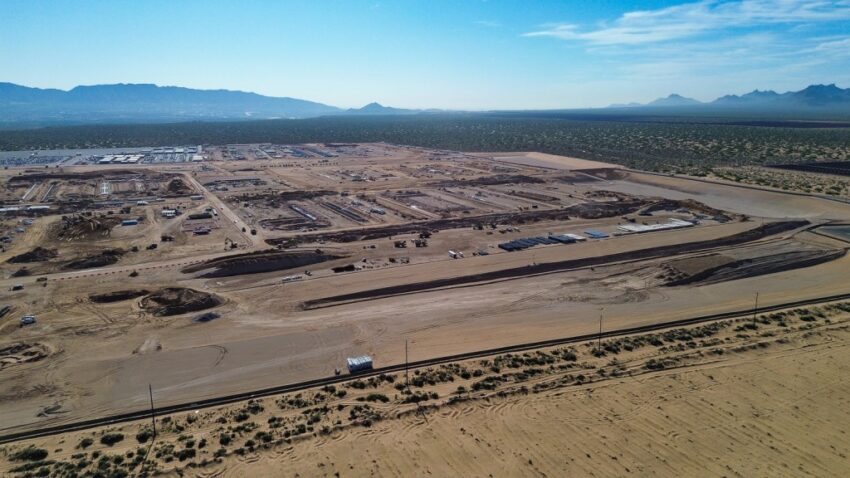
If approved, the data center policies would only apply to future facilities built within the city limits. They would not likely apply to Meta’s $10 billion data center that’s under construction and expected to start operating in July, according to filings El Paso Electric submitted to the Public Utility Commission of Texas.
The rules also wouldn’t apply to data centers built within El Paso County but outside the city limits.
It’s not clear whether the policies would apply to the huge data center proposed on federal Fort Bliss property that Carlyle Group is seeking to develop.
And they also wouldn’t apply to the one being built in neighboring Doña Ana County in New Mexico – where the Project Jupiter campus is under construction.
Still, the policy document reflects public opposition that was clear during recent community meetings and in surveys the city conducted.
“The public sentiment is overwhelmingly critical of leadership, characterized by deep-seated distrust, fear of resource depletion, and frustration over the lack of transparency regarding data center development behind closed doors,” the city’s policy memo read.
Community benefit agreements could replace tax incentives and generate direct funding for projects.
Doña Ana County officials did not execute a community benefit agreement with the developers of Project Jupiter, which is backed mainly by Oracle. However, one example of a kind of negotiated community benefit is a legally-binding requirement that developers provide $50 million over time to Doña Ana County – including $10 million to the city of Sunland Park – to improve and repair aging, dilapidated water systems in the southern portion of the county that has long dealt with poor water quality and inadequate infrastructure.
For its part, Meta agreed to provide $500,000 in education funding in El Paso, and also $25,000 to help El Paso Water ratepayers pay their bills.
“Negotiations with data center operators also present an opportunity to distribute some of the wealth of the AI economy, and well-developed community benefits agreements that have monitoring and have teeth can make housing a data center worthwhile to a community,” Keeler said.
“They can fund schools, they can fund public works,” she said. “They can also provide the monitoring and safeguards necessary to make sure that things like water resources are properly stewarded.”
El Paso City Council Meeting
What: Discussion on proposed framework for future data centers within the city limits
When: 9 a.m. Tuesday, May 26.
Public comment on agenda items begins at 10 a.m. Requests to speak must be received by 9 a.m. Members of the public may comment at 10 a.m. or at the time the item is heard, but not both.
Where: Council Chambers, City Hall, 300 N. Campbell St.
Information: City Council meeting agendas
The post Proposal: No tax breaks, incentives for future data centers within city appeared first on El Paso Matters.
Read: Read More