



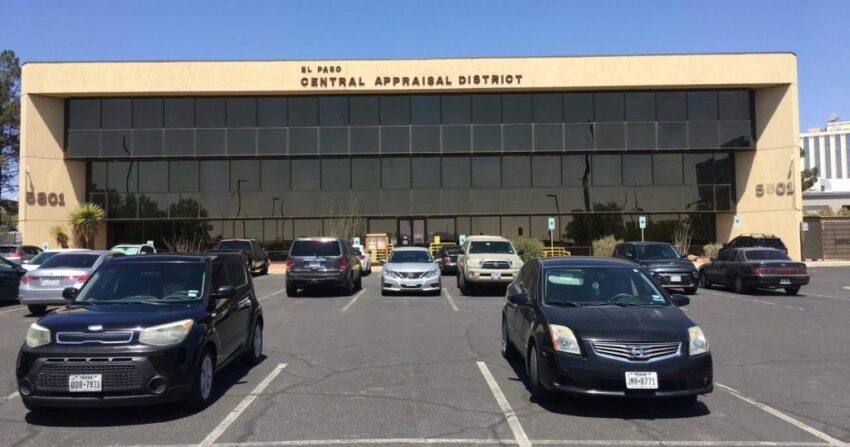

El Paso homeowners have received their property valuations for 2026, beginning a process that ultimately will lead to property tax bills at the end of the year. Only some properties received new appraisals this year from the El Paso Central Appraisal District, with the average market value increasing by about 3%, according to CAD data provided to El Paso Matters.
The “preliminary” appraisal data won’t be available until April 30, said David Stone, the deputy chief appraiser for EPCAD, so these numbers are considered “prepreliminary.” The final estimates will be available in the summer, after the protest period ends.
Here’s what you should know about the appraisal, and what’s happening next.
Why is this necessary?
Property taxes are the primary way that local governments in Texas pay for the services they provide.
This has been true for decades. Texas even has written into its state Constitution that an income tax, which many states use along with property taxes and sales taxes, is prohibited.
A property tax is essentially a form of a wealth tax. To know how much to tax you, governments have to first place a value on your property. That’s the role of central appraisal districts across Texas.
Under Texas law, appraisal districts must set values based on what the property would sell for under normal conditions. In determining that, the districts rely on recent sales records for similar properties. The districts do mass appraisals, without visiting individual properties, based on records on file.
With an income tax, you have to pay a percentage of what you earn to the government. With a property tax, how much you owe is determined in large part by what some of your neighbors paid whey they bought their houses in the previous year or so.
Texas historically has had fairly inexpensive land and housing. That has changed over the past 30 years or so, which has driven increasing complaints about rising property taxes around the state.
Property taxes are particularly challenging for low-wealth communities like El Paso.
In most Texas urban areas, about two-thirds of property is commercial and one-third is residential. That is reversed in El Paso, so homeowners bear much of the tax burden.
How does the appraisal process work?
State law requires all property to be reappraised at least every three years, but most appraisal districts in urban areas have been doing them annually in recent years because of rapidly escalating home sale prices.
This year is technically not a reappraisal year, but 86% of El Paso residential property was reappraised in 2026, according to the EPCAD data.
Homes that weren’t reappraised are in areas with little real estate activity in the past year, or limited change in valuations.
During and immediately after the COVID-19 pandemic, Texas home prices rapidly escalated, including in El Paso. In 2020, the average appraised value of a home in El Paso County was about $137,000. In 2025, it had surpassed $245,000, an increase of 79% since 2020. So far this year, the average home value is about $253,000, about 85% above 2020.
State law says that the taxable value of a property with a homestead exemption can only increase by 10% a year. Because of the run-up in values between 2020 and 2023, many El Paso homeowners will be facing 10% increases in their taxable value for several years to come, even if their properties don’t increase in value in that time.
About 49,000 homes reappraised this year were accounts with no change in market value but where the appraised value increased because of that 10% prior year homestead cap – a so-called “circuit breaker adjustment” from previous years where a value of a properly increased sharply and the appraisal district decided to spread the increase over several years.
What can I do if I think my appraisal is too high?
Under Texas law, you can protest your appraisal, but you must do so by May 15 or 30 days after the date of your notice, whichever is later.
The simplest way to protest is by using El Paso Central Appraisal District’s online portal. The portal describes the type of evidence you can submit.
To win a protest, you’ll have to show that the information used by EPCAD is incorrect. This could be because of structural issues with your home that reduce its value; it could be because the measurements for your property are inaccurate; it could be because you believe the appraisers used improper comparable sales in calculating your value.
The district can provide you with the comparable sales they used in their calculation. Because property sales data isn’t public record in Texas, it’s almost impossible for an average person to access records of comparable sales. Homeowners can ask real estate agents to help them find that information.
The protest process starts with meetings with appraisal district employees, and could go through a formal Appraisal Review Board process if the property owner isn’t satisfied after discussions with the employees.
When will I know my property tax bill?
Most El Pasoans pay property taxes to five governments – city, county, school district, hospital district and community college. Those governments will set property tax rates during the summer.
The county, school districts and the city of El Paso can’t raise taxes more than 2.5% above prior year without voter approval. The limit is 3.5% for other governments. Texas law generally requires local governments to reduce tax rates when collective property values increase.
Even with those limits, some property owners can see higher increases than others in their property tax bills, especially if their valuations grew more rapidly than the average.
Property tax bills go out in the fall, and the last day to pay them without a penalty is Jan. 31 of the following year.
Mortgage companies pay property tax bills for people who have loans on their properties and have been paying into an escrow account monthly.
Are El Paso property taxes higher than other Texas cities?
Well, you rarely if ever hear someone say, “Man, I can’t believe how little I pay in property taxes.”
Property taxes in Texas are among the highest in the country, but that is due in part to the fact that Texas doesn’t also have an income tax.
Because housing is much less expensive in El Paso than in most other Texas cities, the median home property tax bill here – meaning half are higher and half lower – is generally lower than in other urban areas in the state.
And because most of our property tax base is residential rather than commercial, El Paso’s city government can raise and spend far less per-person on services than other Texas cities.
The post What El Paso homeowners should know about 2026 property appraisals and taxes appeared first on El Paso Matters.
Read: Read More